Hiring structural steel contractors in Tempe, AZ comes down to one question: can this company run fabrication, erection, and quality control under one roof without dropping the ball on handoffs? Steel projects move through distinct phases, and a contractor who controls each one tends to deliver fewer delays. Here's what separates a qualified structural steel team from one that's just good at marketing.
What Structural Steel Contractors Actually Do, From Shop to Site
A full-service structural steel contractor covers everything from the first shop drawing to the final bolted connection. That includes fabrication, erection, project management, delivery logistics, and quality checks at every stage.
Timelines shift based on project size, shop backlog, and permitting, but most structural steel scopes follow a similar sequence:
| Phase | What Happens | Typical Timeframe |
|---|---|---|
| Shop drawings & detailing | Engineering plans converted into fabrication-ready drawings | 1-3 weeks |
| Fabrication | Cutting, welding, and assembling steel members in the shop | 2-6 weeks |
| Delivery & staging | Material trucked and staged to match erection sequence | Ongoing, tied to erection schedule |
| Erection | Crews set and connect steel on site | Days to several weeks, depending on building size |
| QA & final inspection | Welds, bolts, and tolerances verified against drawings | Concurrent with fabrication and erection |
Knowing each piece helps you spot a contractor equipped to run the whole scope instead of just part of it. If your project also involves broader structural work beyond the steel frame, our structural remodeling services cover that scope too.
Steel Fabrication
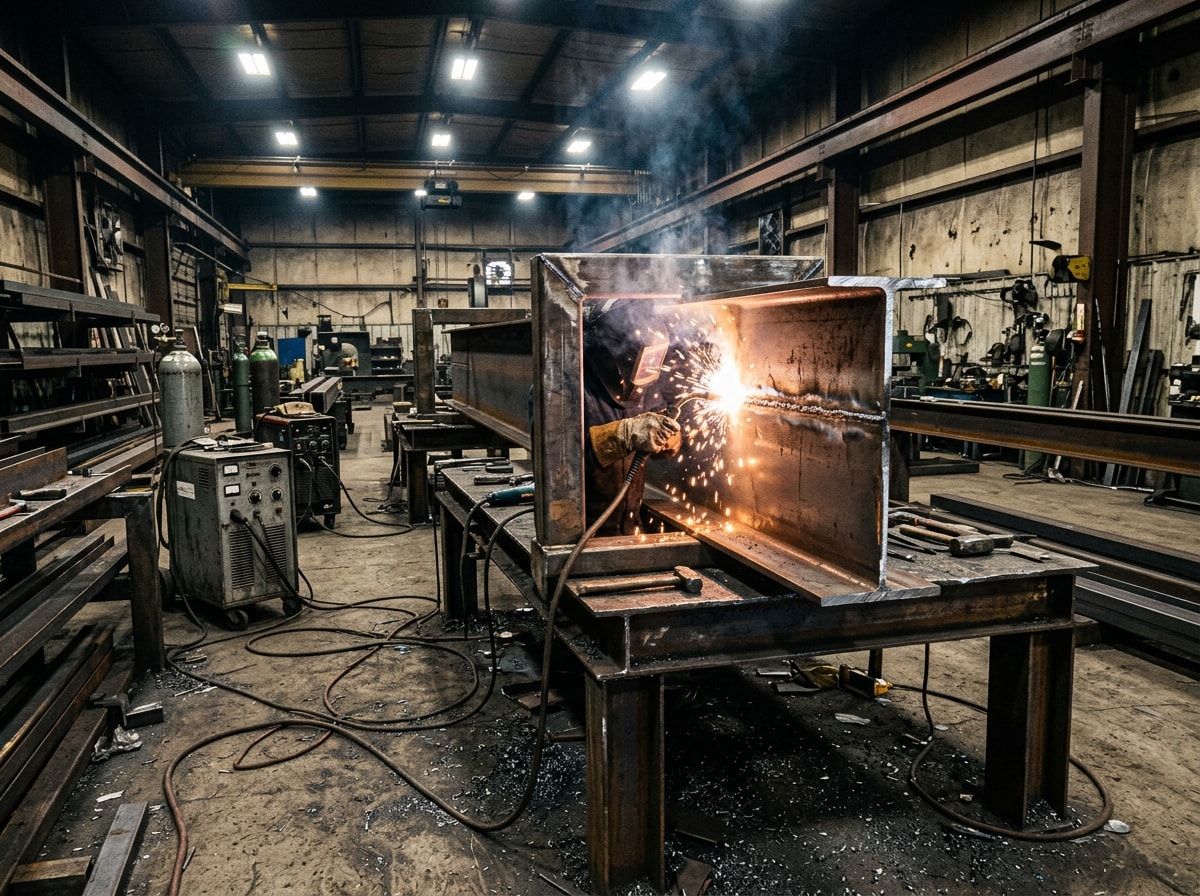
Fabrication happens in the shop, long before any steel reaches the jobsite. It starts with shop drawings that translate engineering plans into precise cutting and assembly instructions for structural steel members. Skilled fabricators then cut, weld, and assemble those pieces to exact tolerances, setting the stage for a smooth erection process later.
Steel Erection
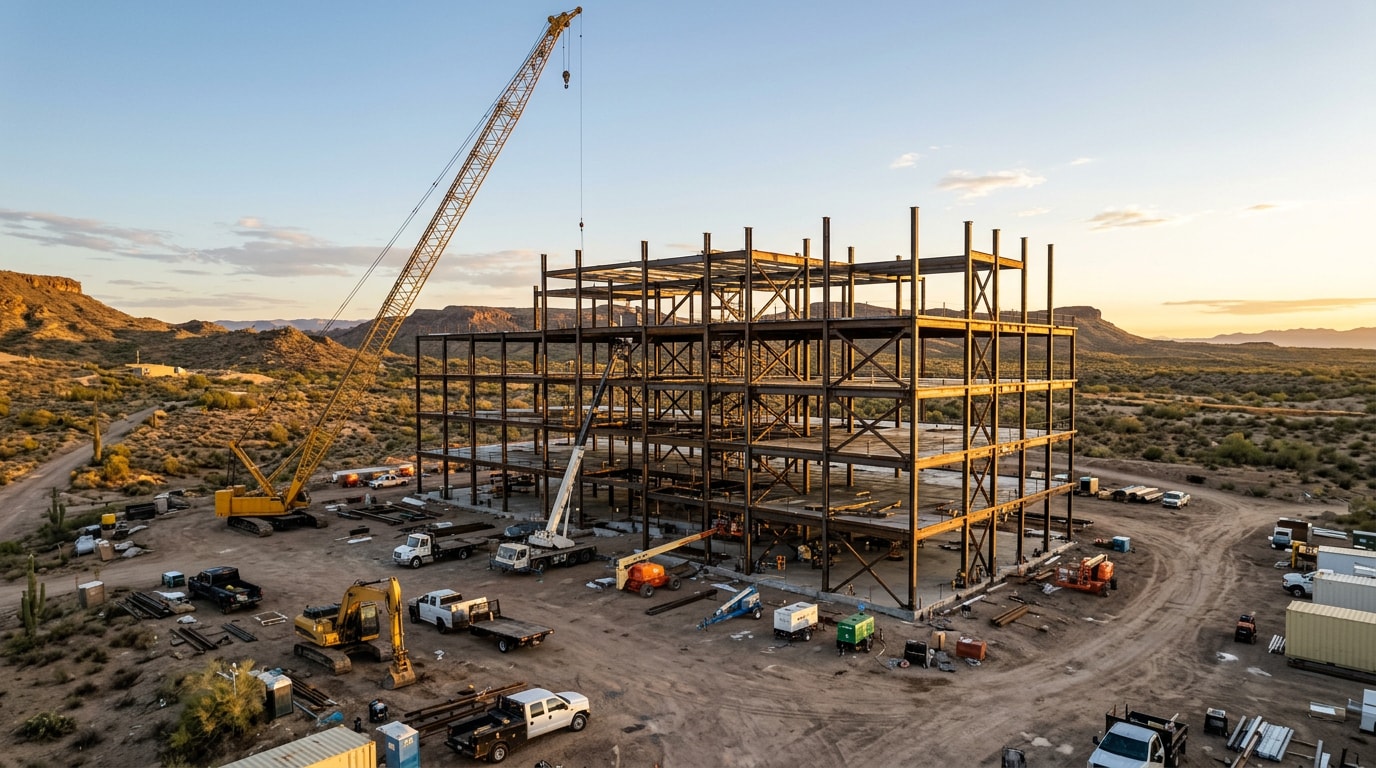
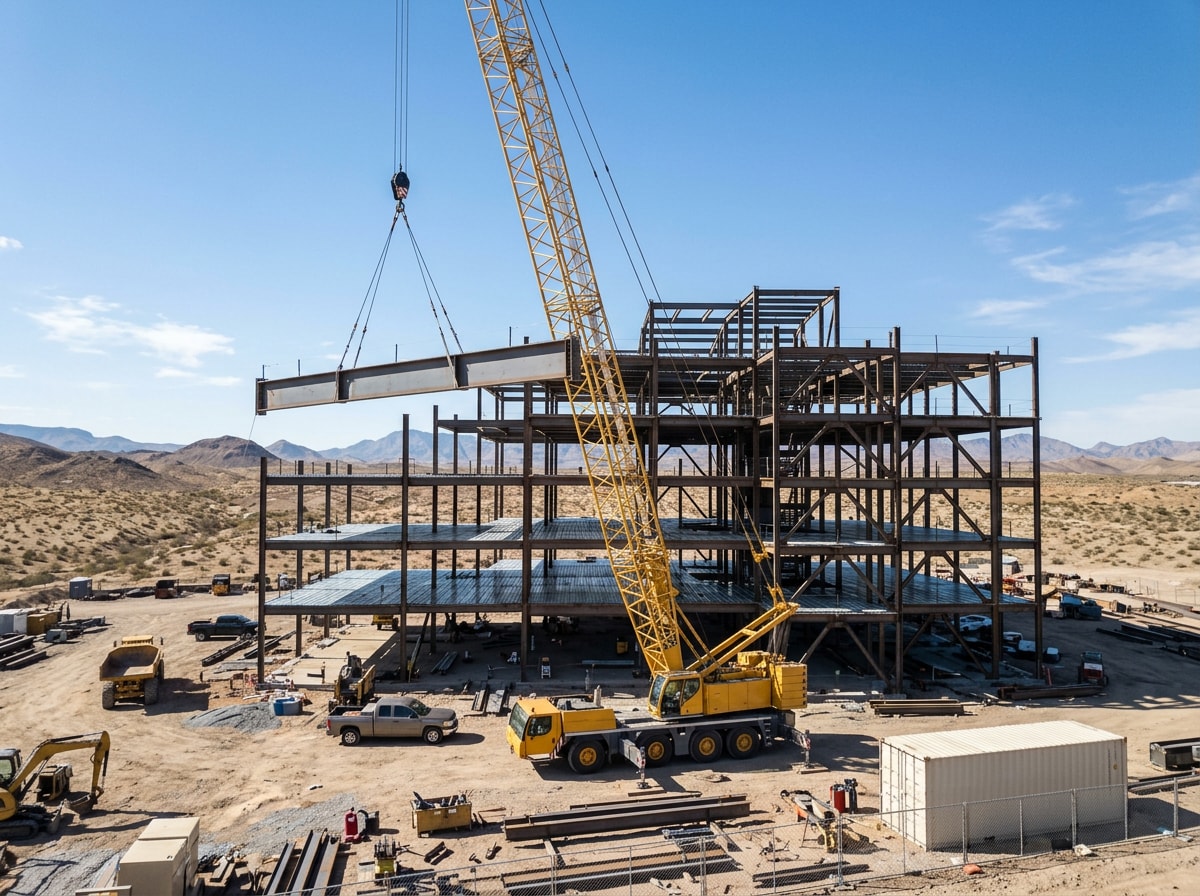
Steel erection is where the frame actually takes shape on site. Crews use cranes to lift and set beams and columns, then bolt or weld connections according to the engineered sequence. On-site installation has to be coordinated tightly with other trades, since structural steel erection in Tempe often happens on compressed schedules with multiple crews working in close proximity.
Project Management
A dedicated project manager keeps the steel scope moving in step with the rest of the job. That means building a realistic construction schedule, coordinating handoffs between fabrication and erection crews, and staying in constant contact with the general contractor. Good scope coordination here prevents the kind of delays that ripple through an entire project.
Delivery & Logistics
Getting fabricated steel to a Tempe jobsite at the right time takes real planning. Material staging in the shop and yard has to match the sequence erection crews will follow once pieces arrive. Just-in-time delivery reduces clutter on tight urban sites and keeps delivery logistics from becoming a bottleneck.
Quality Assurance
Steel quality assurance verifies that fabricated and erected steel actually matches the approved drawings and meets structural tolerances at every stage. A contractor with a genuine QA program, rather than one that just claims "quality," typically runs through the following checks:
- A written quality manual that matches what actually happens on the shop floor, not just a binder for show
- Material traceability, including mill test reports on file so any member can be traced back to its source heat
- Dimensional accuracy checks before steel ever leaves the shop
- Weld inspection using visual methods and, where specified, ultrasonic or magnetic particle testing
- A documented nonconformance process for anything that doesn't pass
That level of documentation is exactly what the American Institute of Steel Construction audits before awarding certification.
Safety Programs
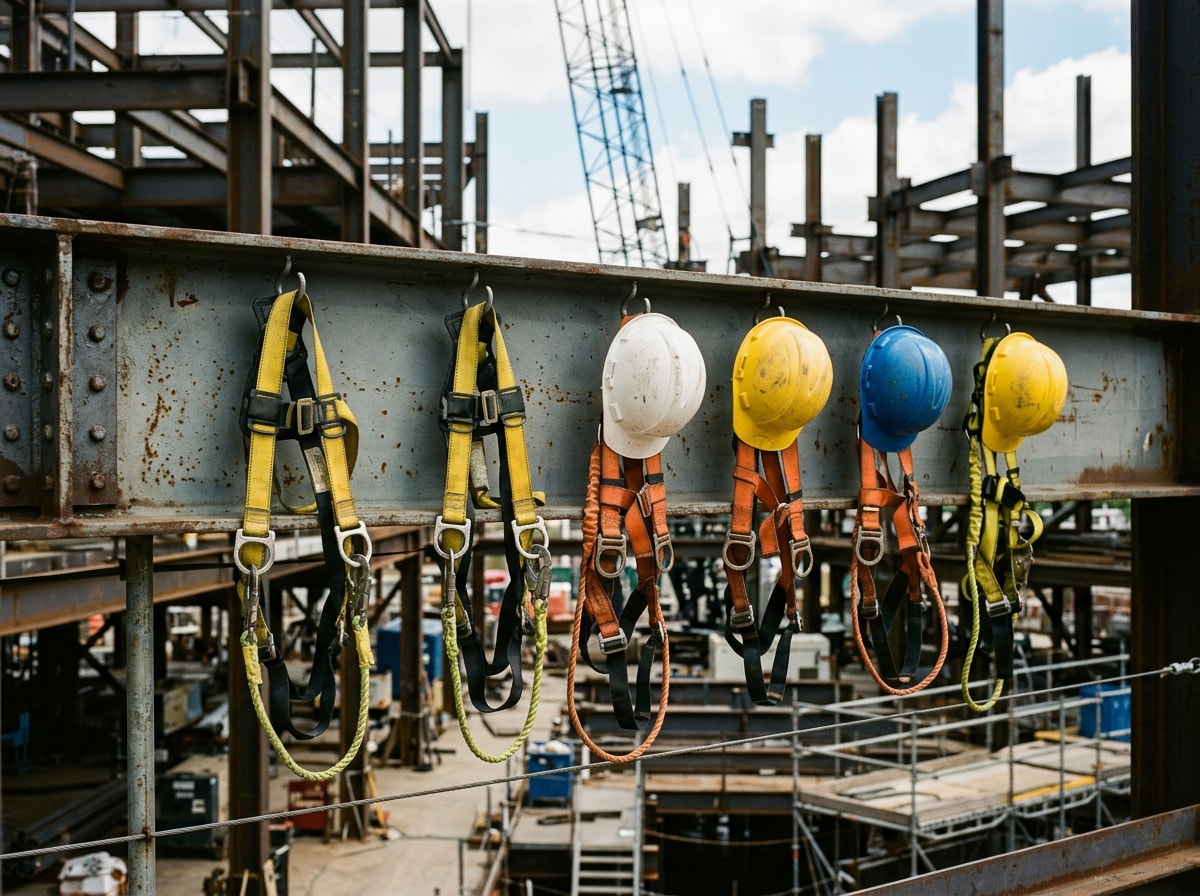
A serious jobsite safety program covers fall protection, crane safety protocols, required PPE, and ongoing training specific to steel erection hazards. Because erection work happens at height and often involves heavy rigging, steel erection safety can't be an afterthought.
Steel erection is one of the top 10 most hazardous occupations according to BLS fatality data year after year. Federal rules under Subpart R, 1926.750, the current steel erection rule , published by OSHA, set the minimum requirements every contractor on these projects has to follow. A compliant program typically includes:
- Guardrails, nets, or personal fall arrest systems anytime work happens above the threshold height
- A site-specific erection plan reviewed before steel goes up
- Daily rigging and hoisting inspections
- Controlled decking zones clearly marked and enforced
- Heat-illness prevention protocols during Arizona's summer months
Licensing and AISC Certification: What to Verify Before You Hire
In Arizona, structural steel work requires a contractor to hold the appropriate classification through the state's Registrar of Contractors. Established in 1931, the Registrar of Contractors (AZ ROC) licenses and regulates over 60,000 residential and commercial contractors. That licensing confirms the business meets bonding and insurance requirements for structural work.
Beyond state licensing, AISC certification is a separate signal worth checking. AISC certified fabricators are shops whose quality systems have passed a third-party audit against AISC 207, the certification standard for structural steel. For a building fabricator specifically, certification encompasses all aspects of providing structural steel fabrication, from contract receipt through final delivery.
Before you sign with a steel contractor, ask to see:
- An active Arizona ROC license number you can verify directly
- Current AISC certification category (building fabricator, erector, or both)
- Proof of general liability and workers' comp coverage
- References from at least two completed projects of similar scope
Together, a valid ROC license and AISC certification give property owners and general contractors a reasonable basis to trust that a steel contractor can deliver safe, code-compliant work. You can confirm license status directly through Arizona's Registrar of Contractors.
Single-Source Fabrication and Erection: Why It Matters
A single-source steel contractor handles both fabrication and erection under one contract, rather than splitting the work between a separate shop and a separate erection crew. That setup cuts down on the handoff errors and scheduling gaps that tend to appear when two companies have to coordinate their own timelines and standards. It also simplifies accountability: there's no finger-pointing between a fabricator and an erector when both answer to the same team.
Ready to see how that plays out on an actual build? Start Your Custom Home and our team will walk through fabrication, erection, and scheduling for your specific project before a single beam is cut. You can also browse completed work on our projects page.
Scheduling Around Tempe's Climate and Job-Site Realities
Desert heat changes how steel erection gets scheduled in the Valley. Summer highs that regularly climb past 110°F push crews toward early-morning starts, shortened midday windows, and stricter hydration and rest-break protocols for anyone working at height. Monsoon season, roughly July through September, adds sudden wind gusts and dust that can halt crane lifts with little warning, so a contractor working around Tempe needs a weather contingency built into the schedule, not bolted on after the fact.
Tight urban infill sites around the Tempe corridor add another layer: limited laydown space means steel often has to arrive just-in-time rather than staging on site for days. A contractor familiar with the local permitting process and traffic patterns around campus-adjacent and downtown Tempe sites tends to hit erection windows that out-of-area crews miss. See how we approach projects across the Tempe service area and the rest of Arizona.
Industries and Sectors We See Across the Valley
Structural steel work spans many building types, and each one brings different code requirements, load considerations, and schedule pressures. A contractor experienced across sectors is better equipped to anticipate problems before they slow a project down.
Healthcare
Healthcare facilities place unusual demands on structural steel, including vibration control for sensitive equipment and heavier mechanical loading than typical commercial buildings. Construction often has to be phased carefully around occupied spaces so patient care isn't disrupted during the build.
Schools
School construction usually runs on a tight calendar tied to summer breaks, which puts real pressure on steel erection timelines. Projects on occupied campuses also require extra safety phasing to keep construction zones separated from students and staff.
Government
Public and government steel projects typically come with stricter compliance requirements, along with detailed bonding and documentation expectations. Contractors working in this space need systems in place to track paperwork as closely as they track the steel itself.
Commercial
Office, retail, and mixed-use commercial projects make up a large share of structural steel work in the Tempe corridor. Timeline reliability tends to matter most here, since delays in the steel frame push back every trade that follows. If your scope includes a full build rather than just the frame, our commercial building construction team can take it from steel through finishes.
For structural work tied to a larger renovation or addition, our guide on BIM structural services) breaks down how digital modeling now fits into the structural steel and framing process. Visit our homepage to see the full range of general contracting and structural services we offer across the Phoenix metro.
FAQ
What do structural steel contractors do?
They fabricate and/or erect the steel frame of a building, which is distinct from a general contractor who oversees the entire project. Structural steel contractors detail, cut, weld, and assemble steel members in a shop, then set and connect them on site according to engineered plans. Most operate as specialized subcontractors brought in specifically for the structural frame phase.
Do I need a licensed contractor for structural steel work in Tempe?
Yes. Structural steel falls under Arizona's contractor licensing requirements, which means the company doing the work needs an active Registrar of Contractors license in the correct classification. Always verify the license number directly with the ROC before signing a contract.
How much do structural steel contractors charge in Tempe, AZ?
Pricing depends heavily on tonnage, connection complexity, building height, and current steel market pricing, so there's no single flat rate. Get itemized quotes that separate fabrication, delivery, and erection costs so you can compare bids apples to apples.
What's the difference between fabrication and erection?
Fabrication happens in a shop, where raw steel is cut, welded, and assembled into finished members. Erection happens on the jobsite, where those members are lifted into place with cranes and connected per the engineered sequence. A single-source contractor handles both under one contract.
How long does structural steel erection take for a typical commercial building?
Erection timelines range from a few days for a small single-story structure to several weeks for a multi-story commercial building, depending on tonnage and crew size. Weather delays, especially during Arizona's monsoon season, can extend that window.
Do structural steel contractors work directly with homeowners, or only general contractors?
Most structural steel work on residential projects, like room additions or structural remodeling, is subcontracted through a general contractor rather than hired directly by a homeowner. That setup keeps steel scheduling coordinated with the rest of the build, from permitting through final inspection.