Three season sunrooms in Paradise Valley, AZ give homeowners extra living space without the cost or complexity of a full home addition. They cost less than a four-season room, install faster, and work well for most of the year in a desert climate. Here's what the room type actually includes, what it costs locally, and where it fits around Phoenix-area summers.
What Makes a Sunroom "Three-Season"?
A three season sunroom is a specific construction category, not just a marketing label. Four traits define it:
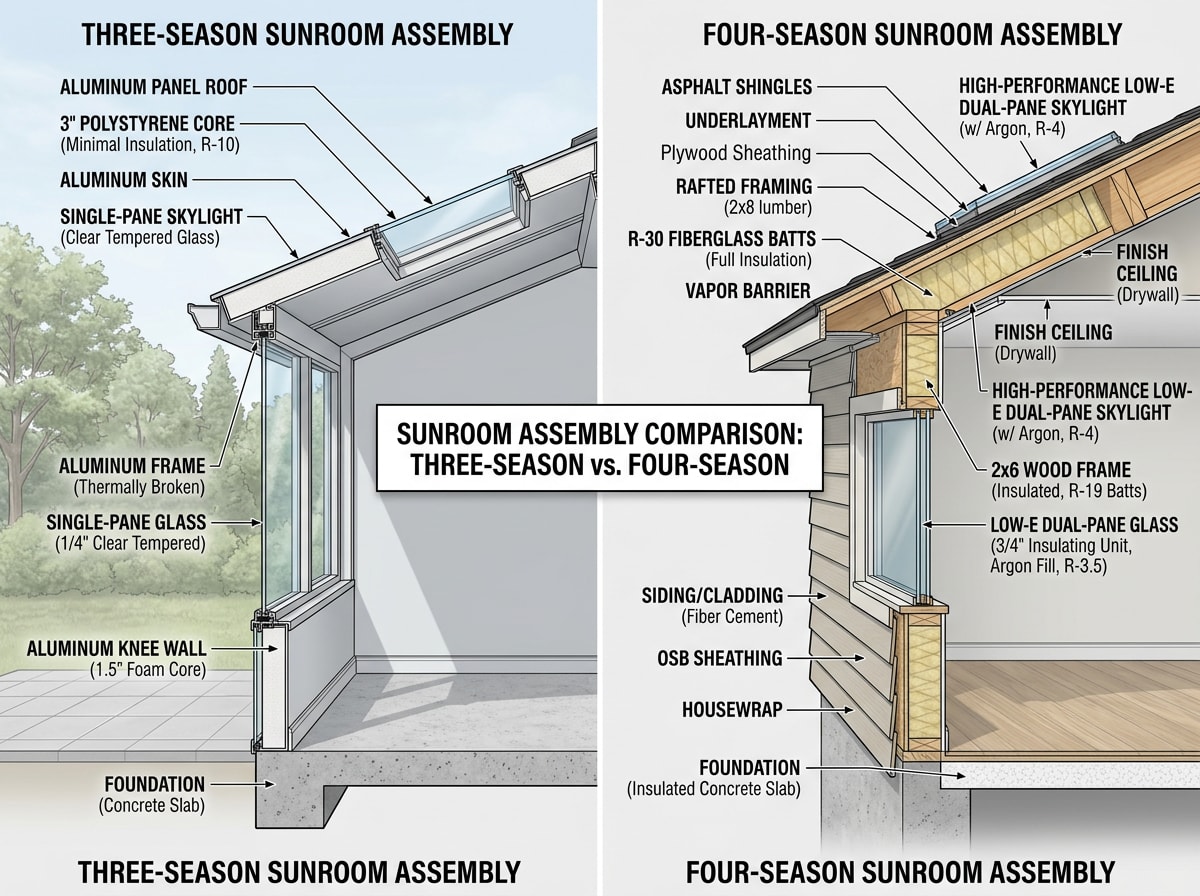
- Minimal insulation in the walls and roof, instead of the full R-value assemblies used in year-round rooms
- Single-pane windows instead of the dual- or triple-pane glazing found in four-season builds
- No ducted HVAC, relying instead on ceiling fans or portable cooling units
- Simplified interior finishing, such as painted wall panels instead of full drywall and trim packages
An enclosed porch built this way still blocks wind, dust, and bugs. Its low R-value means it tracks outdoor temperatures closely, which works fine through Paradise Valley's long fall-through-spring stretch but won't keep pace with peak summer heat.
Three-Season Sunroom Costs in Paradise Valley, AZ
Three-season sunrooms generally run lower per square foot than a comparable four-season build, mainly because they skip full insulation, dual-pane glazing, and ducted HVAC work. Price still shifts with size, roof type, and flooring choice.
| Feature | Three-Season | Four-Season |
|---|---|---|
| Glazing | Single-pane | Dual/triple-pane, Low-E |
| Insulation | Minimal | Full wall/roof R-value package |
| HVAC | Fans/portable units | Ducted, tied to home system |
| Typical finish | Simplified | Full drywall/trim |
| Best for | Spring through fall use | Year-round use |
Exact numbers vary by contractor, materials, and lot conditions, so treat any published range as a planning estimate rather than a quote. For pricing specific to your property, get a free consultation before you finalize a budget.
Does a Three-Season Sunroom Work in Arizona's Climate?
Yes, with realistic expectations about the hottest months. Phoenix-area normal highs reach 107 degrees based on 1991-2020 NOAA normals , and that heat typically holds from June through September. A three-season room delivers genuine comfort from roughly October through April, but it isn't built to compete with an air-conditioned living room in July or August.
That tradeoff is exactly why these rooms work so well here. Paradise Valley's mild stretch of the year is long enough that a lightly built room still earns its keep for seven or eight months before summer shade screens and schedule shifts take over.
Building in Paradise Valley also means working within the Town's own permit rules, which are stricter on structure-by-structure review than many neighboring cities. The Town requires a separate permit application for each type of structure, including items like guest houses, ramadas, and fences , and a sunroom addition falls under that same review process. Confirm current requirements directly through the Town of Paradise Valley building permit office before finalizing plans, especially if your lot sits in a hillside overlay zone.
Three-Season Sunroom Design Features
Four decisions shape every project: window style, roofing, flooring, and how the room connects to your house. Working through these early speeds up the quote process.
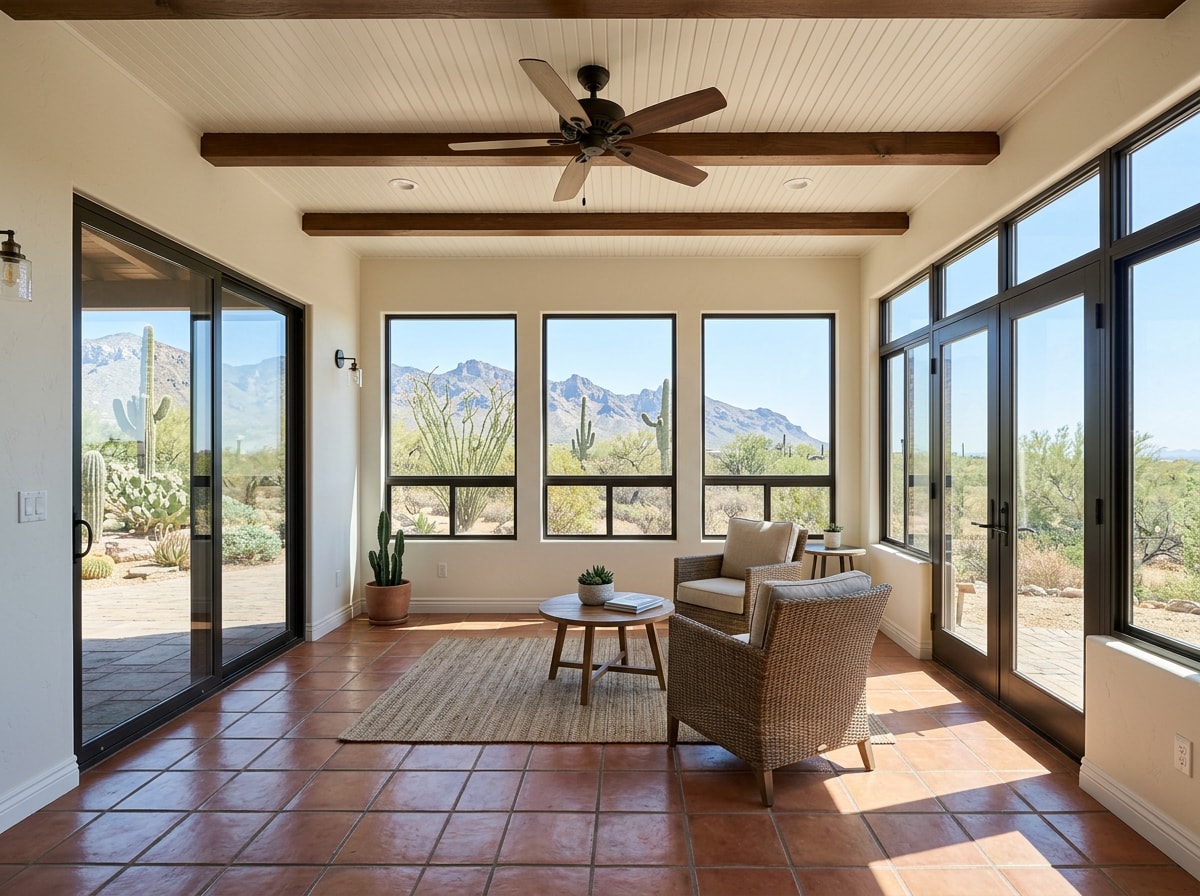
Window styles and placement. Sliding, casement, and floor-to-ceiling windows are the most common choices. In our project walkthroughs across Paradise Valley backyards, orienting larger panes away from direct western sun consistently cuts down on glare and afternoon heat buildup without sacrificing the view.
Roofing options. Roofs range from fully solid to partially glazed panels. A solid roof blocks more heat and glare, which is why it's the more practical choice for most Paradise Valley lots. We've seen homeowners who chose a glazed roof for the look rarely regret switching to solid once their first June arrives.
Flooring choices. Because the room isn't climate-controlled, flooring needs to handle temperature swings well. Tile, sealed concrete, and composite decking resist warping and fading better than hardwood or carpet in a semi-outdoor setting.
Access points. Entry doors typically connect the sunroom to the kitchen, living room, or backyard patio. Sliding or French-style doors at these access points keep the indoor-outdoor transition feeling seamless.
Best Uses and Added Home Value
A three-season sunroom works well as a reading nook, home office, morning coffee spot, or cool-evening entertaining space. It extends your outdoor living into something usable without full exposure to wind, dust, or insects.
For many Paradise Valley listings, a well-finished sunroom also adds real resale value, since buyers see it as flexible square footage rather than a single-purpose room. Browse examples of completed additions in the area on our projects page, or see how a similar enclosure project was scoped in our Screen Room Enclosures in Scottsdale, AZ guide.
The Build Process: Design, Permits, Construction
The build generally moves through three stages:
- Design consultation to set layout, materials, and budget
- Planning phase covering permits, structural review, and engineering sign-off
- Construction itself, including footings, framing, and final install
Most contractors fold measurements and material selection into the design step, then handle permitting and framing logistics before final install. A clear sequence keeps the timeline predictable, usually a matter of weeks rather than months. If you're also weighing a full addition instead of a lighter sunroom build, our room additions page covers how that process differs.
Energy-Efficient Upgrades for Extended Comfort
An energy-efficient upgrade package can stretch comfortable use further into the Phoenix summer. Low-E glass coatings reflect solar heat before it enters the room, which matters more here than in milder climates. In hot regions, windows facing south, east, and west benefit most from a low solar heat gain coefficient, since warmer climates don't need extra heat from the sun, so a low SHGC matters most for south, east, and west-facing glass .
Insulated roof panels, retractable shade screens, and reflective window films are common add-ons. The ENERGY STAR residential window program is a useful reference when comparing U-factor and SHGC ratings across contractor glass packages. Pairing even one or two upgrades with good orientation planning can meaningfully extend comfortable months without converting the whole room to full four-season specs.
Choosing a Three-Season Sunroom Contractor
Look for a contractor with current Arizona registration, relevant trade credentials, and a workmanship warranty you can read in full before signing. Local project experience matters too. A builder who knows Paradise Valley will understand how desert soil, sun exposure, hillside overlay rules, and HOA guidelines affect design choices.
Ask any contractor you're vetting:
- How many three-season rooms have you completed in this zip code?
- What's included in your warranty, and for how long?
- Who pulls the permit, and who handles inspections?
- What's your typical timeline from design sign-off to final walkthrough?
Ready to compare quotes? Request a free consultation and we'll walk your property with you before you commit to a design.
Financing Your Three-Season Sunroom
Financing is commonly available through contractors or third-party lenders, and most Paradise Valley builders offer multiple payment options to spread out the cost. Before signing anything, ask about interest rates, loan terms, and whether a home improvement loan affects your home's equity position.
Rates and promotional terms change frequently, so get current details directly from your contractor rather than relying on advertised specials. You can also start the conversation through our homepage to see the full range of services we offer alongside sunroom additions.
FAQ
How much is a 3 season sunroom?
Three-season builds typically cost less per square foot than a comparable four-season room, with the exact price depending on size, roofing, and glazing. See the cost comparison table above for a planning range, or request a personalized estimate for your property.
What is the cost difference between a 3-season and a 4-season sunroom?
A three-season room generally costs noticeably less per square foot than a four-season version, largely because it skips full insulation, dual-pane glazing, and ducted HVAC. The gap varies by project, but the comparison consistently favors three-season builds for budget-conscious homeowners.
What are the pros and cons of a 3-season room?
Pros include lower upfront cost, faster build times, and a comfortable upgrade to backyard living space. The main limitation is no reliable air conditioning for summer, which reduces usability during the hottest months of the year.
Can I use a three-season sunroom during Arizona summers?
Yes, with realistic expectations. Midday heat makes the space uncomfortable without added cooling, but shade screens, ceiling fans, and misting systems extend usable hours. Most Paradise Valley homeowners simply shift room use to mornings and evenings during July and August.
Can I upgrade a three-season sunroom to four-season later?
Yes. A later upgrade usually involves adding wall and roof insulation, swapping in dual-pane glass, and extending ducted HVAC into the space. It's a reasonable path to four-season use down the road, though a retrofit generally costs more than building to four-season specs from the start.